Hub-and-spoke approach for USAF in Asia-Pacific


The US Air Force (USAF) is adapting its air and cyber operations in the Asia-Pacific region to a more distributed approach given that the location of its main military facilities is well-known by potential rivals, with China again proving the focus of attention for planners.
China’s military technology can now provide a layered offensive solution across the South China Sea (SCS), East China Sea and into other, more distant, bodies of water. Its DF-21D has a range of more than 1000 nautical miles and it can be fitted with conventional or 200-300 kilotonne nuclear warheads.
Other missile systems such as
Our news & analysis is now part of Defence Insight®
A Basic-level or higher Defence Insight subscription is now required to view this content.


More from Air Warfare
-
![Saab shows uncrewed concept and accelerates programme with first flight due in 2027]()
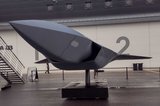
Saab shows uncrewed concept and accelerates programme with first flight due in 2027
Saab expects to fly two collaborative combat aircraft demonstrators, A1 and A2, before the end of the decade, but has stressed that the A3-001 mock-up unveiled on 21 August is only a concept for what could follow in the 2030s.
-
![GKN Aerospace begins engine tests for drone design as part of contract signed in November]()
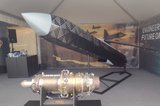
GKN Aerospace begins engine tests for drone design as part of contract signed in November
A mock-up displayed by GKN Aerospace on 21 August is planned to have a maximum range between 600km and more than 1,000 km with a payload capacity of 100-300kg.
-
![AI-controlled F-16s advance towards autonomous multi-aircraft operations in US]()
AI-controlled F-16s advance towards autonomous multi-aircraft operations in US
The US plans to progressively expand VENOM/AIR testing from single-aircraft flights to multi-platform autonomous operations over the next 12–24 months, generating data that could support future US military AI programmes, including Collaborative Combat Aircraft.